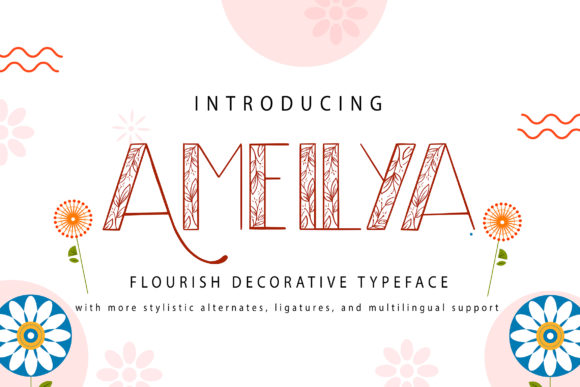
Amellya Font: Floral Decorative Type for Makers
Sitting at my workbench surrounded by swatches of textured linen paper and half-cut vinyl sheets, I often find that the difference between a good product and a bestseller lies entirely in the typography. When I first loaded Amellya into my design software to create a new line of botanical candle labels, I wasn't just looking for letters; I was searching for a mood. As a decorative font with a distinct flower-themed style, Amellya immediately transformed a plain jar mockup into something that felt artisanal and intentional. For makers, printable creators, and handmade sellers, finding typefaces that carry this level of inherent charm is essential because it reduces the need for excessive graphic elements while elevating the perceived value of the final piece.
Designing Botanical Candle Labels with Amellya Font
When applying Amellya to physical product packaging like candle labels or soap wrappers, this decorative font serves as the primary visual anchor that communicates scent and atmosphere before the customer even reads the details. In my own process of designing for soy wax candles, I found that the floral nuances within the letterforms naturally complemented ingredients like lavender, rose, and jasmine without requiring additional clipart. The key to using Amellya effectively on small surfaces is understanding its role as a display typeface rather than body text. I reserve this beautiful decorative font strictly for the scent name or the brand logo, keeping the ingredient lists and safety warnings in a clean, high-contrast sans serif font to ensure legibility at small sizes.
For those using cutting machines like Cricut or Silhouette to create die-cut stickers or adhesive labels, testing the weedability of Amellya is a crucial first step. Because it features a flower themed style, some of the ornamental strokes can be delicate. I recommend adjusting the cut settings to a slower speed and using high-quality vinyl to prevent tearing during the weeding process. On curved surfaces like glass jars or tin containers, the organic flow of the letters helps the text wrap naturally, avoiding the stiff, mechanical look that standard scripts sometimes produce. This hands-on application proves that Amellya is not just a digital asset but a practical tool for tangible merchandise.
Amellya for Wedding Invitations and Elegant Stationery
Creating wedding stationery suites requires a balance of romance and readability, making Amellya an ideal choice for decorative fonts used on invitation cards, welcome signs, and place cards. When I designed a sample spring wedding suite, I utilized Amellya specifically for the couple’s names and the "Save the Date" header, allowing the floral personality of the typeface to set a soft, garden-party tone. It is important to remember that while Amellya is perfect for greeting cards and headlines, it should be paired with a simple serif or minimalist sans serif for the logistical details like time, venue, and RSVP information. This font pairing strategy ensures that the invitation remains functional while still feeling luxurious and bespoke.
- Headline Hierarchy: Use Amellya at 48pt or larger for names and titles to showcase the intricate floral details.
- Supporting Text: Pair with a neutral sans serif at 10-12pt for venue and date information to maintain clarity.
- Paper Selection: Test print on cotton rag or textured cardstock, as the organic lines of Amellya absorb ink beautifully on matte surfaces.
- Digital Proofs: Always send clients a PDF proof to verify that the decorative flourishes do not interfere with critical wedding details.
Creating Printable Wall Art Using Amellya Decorative Fonts
Digital download sellers and printable creators will find that Amellya adds significant market appeal to wall art designs, particularly for quotes, affirmations, and nursery decor. When I create printable posters, the flower themed style of this decorative font allows me to sell a "complete" design using typography alone, eliminating the time spent sourcing and licensing separate floral illustrations. For example, a simple quote about growth or nature becomes a standalone piece of art when rendered in Amellya, because the letters themselves provide the visual interest. This efficiency is vital for shop owners who need to maintain a consistent release schedule of fresh designs without burning out on complex illustration work.
However, selling digital products requires careful attention to file preparation and licensing. Before listing any item featuring Amellya, always verify the commercial license terms included with your purchase to ensure you are cleared to sell physical prints or digital templates. In my shop, I use Amellya primarily for short phrases and single-word titles on 8x10 and 11x14 prints. For larger formats like 24x36 posters, I scale the font up significantly to preserve the crispness of the floral details, ensuring that the customer receives a high-resolution file that looks professional when printed at home or through a professional service. The versatility of this typeface makes it a staple asset for anyone building a library of design assets for seasonal or evergreen printable collections.
Branding Materials and Shop Identity with Amellya Typeface
Establishing a cohesive brand identity is challenging for small businesses, but incorporating Amellya into branding materials can instantly signal a feminine, handcrafted, or nature-inspired aesthetic to your target audience. I have used this beautiful decorative font for boutique tags, thank-you cards, and social media graphics to create a recognizable visual thread across all customer touchpoints. Unlike generic scripts that fade into the background, the unique character shapes in Amellya help build memory structures with customers; they begin to associate that specific floral typography with your shop's quality and vibe. This recognition is invaluable for repeat business and word-of-mouth referrals in the handmade community.
When integrating Amellya into your broader brand system, treat it as an accent rather than a workhorse. Your primary logo might use a bold serif or custom hand-lettering, while Amellya shines in secondary applications like seasonal sale announcements, packaging inserts, or Instagram story templates. I also recommend exploring the OpenType features if available; many decorative fonts include alternates, ligatures, or swashes that allow you to customize the look for different contexts. Using a swash version of Amellya for a holiday tag and the standard version for a summer product label keeps the branding consistent yet dynamic. Always keep your master brand files organized so you can quickly swap in this creative font for special promotions without disrupting your core visual identity.
Optimizing Amellya Font for Digital Mockups and Listings
The way you present Amellya in your Etsy listings or portfolio can directly influence conversion rates, so creating realistic mockups that highlight its decorative qualities is a necessary skill for sellers. When I photograph or render products featuring this font, I ensure there is ample negative space around the text so the floral details aren't lost in busy backgrounds. For digital downloads, showing the font in context—such as on a framed print in a living room or on a gift tag attached to a present—helps buyers visualize the end result better than a flat JPEG of the alphabet. This practical storytelling approach bridges the gap between a raw font file and a finished creative project.
Readability in thumbnail images is another critical factor when marketing designs made with Amellya. Since it is a detailed decorative font, it can become illegible when scaled down to mobile screen sizes. I always test my listing photos at 20% zoom to ensure the text remains decipherable. If the floral elements start to blur, I increase the contrast or add a subtle drop shadow to separate the letterforms from the background. Additionally, when writing product descriptions for items featuring this typeface, I explicitly mention "Amellya" and "floral decorative font" to capture search traffic from buyers specifically looking for this aesthetic. By combining technical optimization with authentic maker storytelling, you turn a simple typography choice into a powerful sales driver for your handmade business.